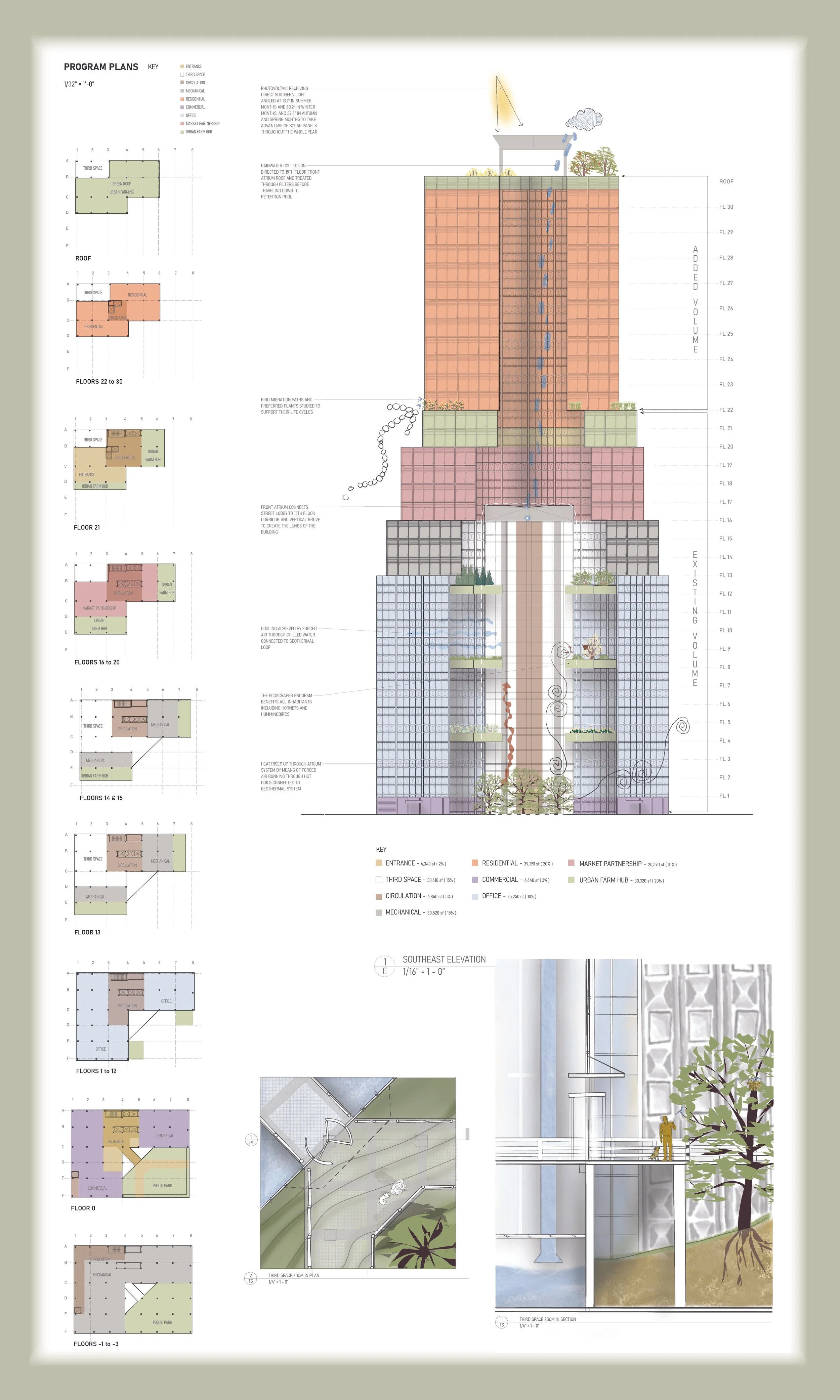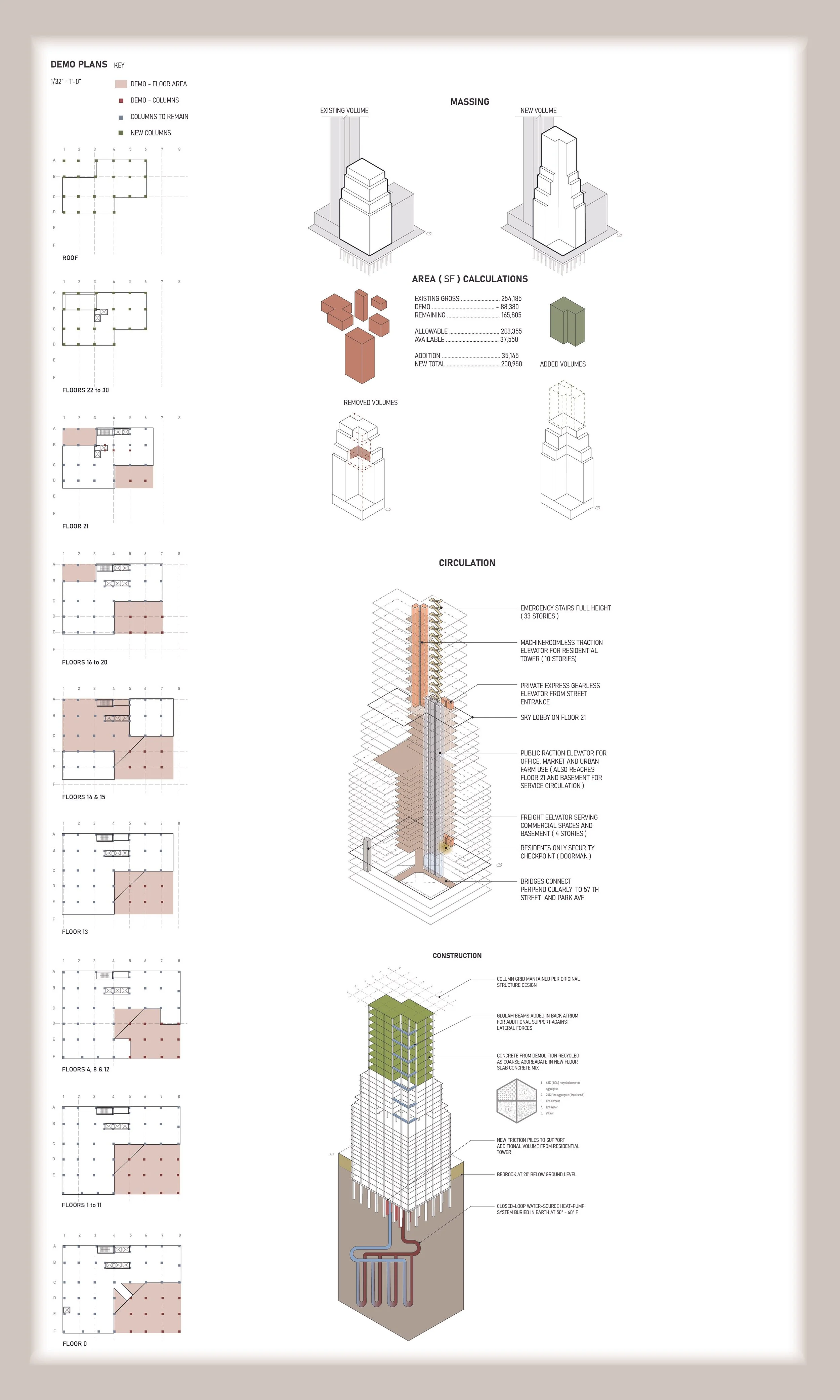
A significant part of my work involved the construction and programmatic logistics—from rethinking elevator placements to maximizing usable space by repurposing demolished portions of the site into an upward extension of the tower. I proposed an upscale residential component designed to financially support public programs, which included partnerships with local and out-of-state farmers to establish a food packing and distribution hub within the building. This hybrid use not only blurred traditional boundaries between corporate, residential, and agricultural functions but also celebrated urban resilience and community engagement.
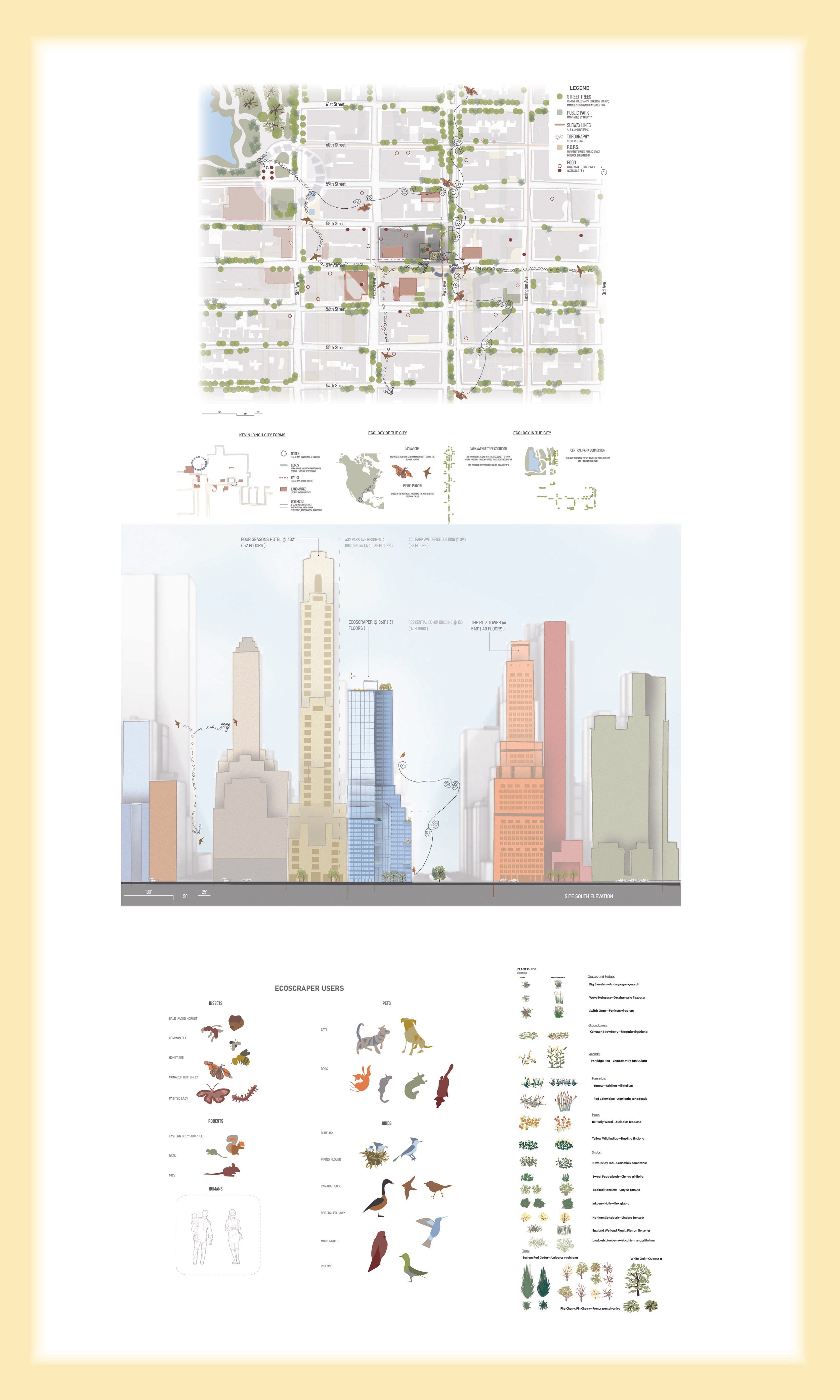
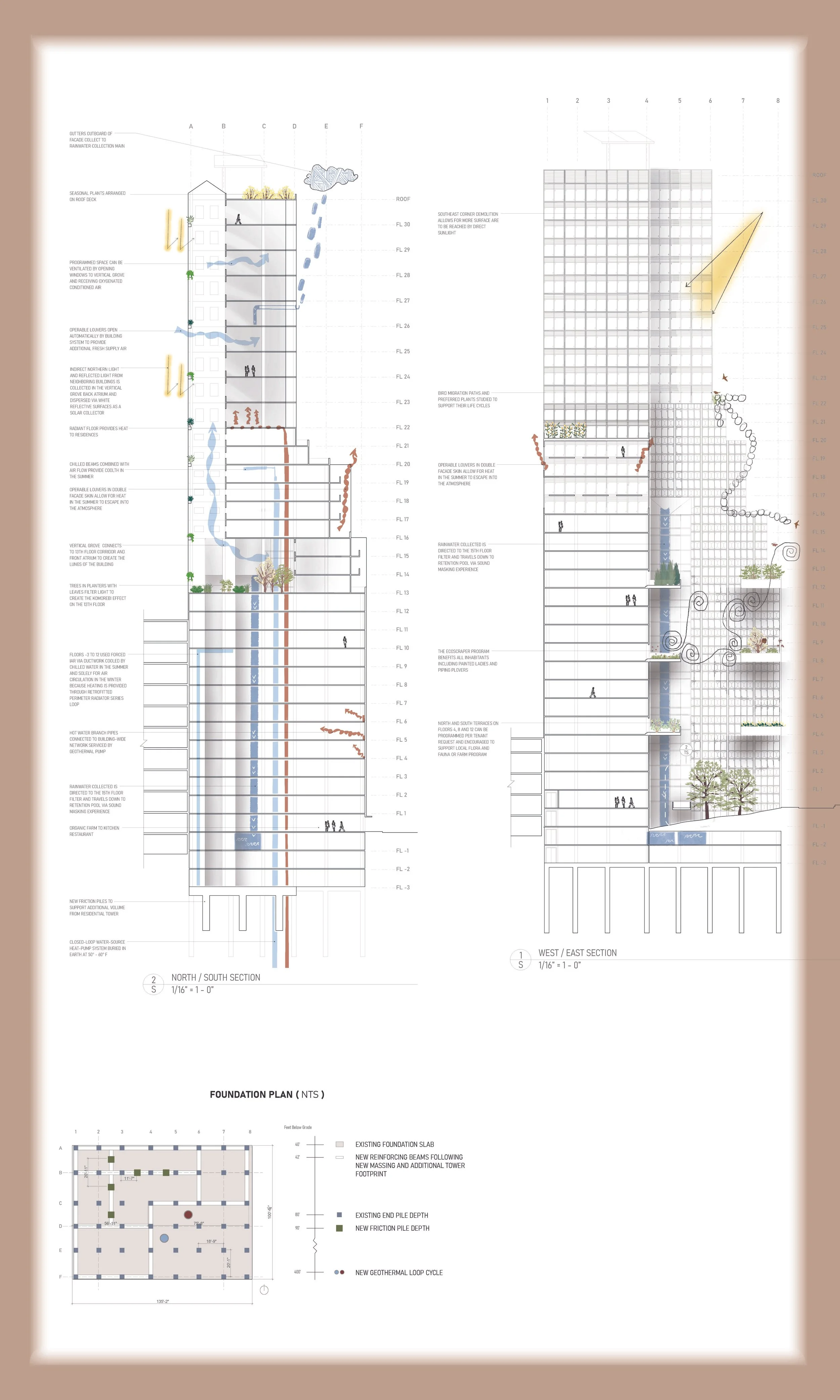
Additionally, I devoted close attention to the landscape ecology of the project, selecting a diverse palette of plant species that would thrive year-round, with a balance of winter-hardy and seasonal flora to maintain vibrancy through New York’s changing climate. This approach reflected the studio’s emphasis on richness of meaning—where the building’s spatial and environmental elements operate on multiple levels simultaneously, creating a living architecture that is adaptable, sustainable, and deeply connected to its urban and natural context. This project was a formative experience in understanding how existing structures can be reimagined to meet contemporary needs without erasing their past, embodying a future-forward vision for urban living.
ECOSCRAPER
location | Midtown, NY
date | Fall 2025
class | Design Studio 3, Parsons
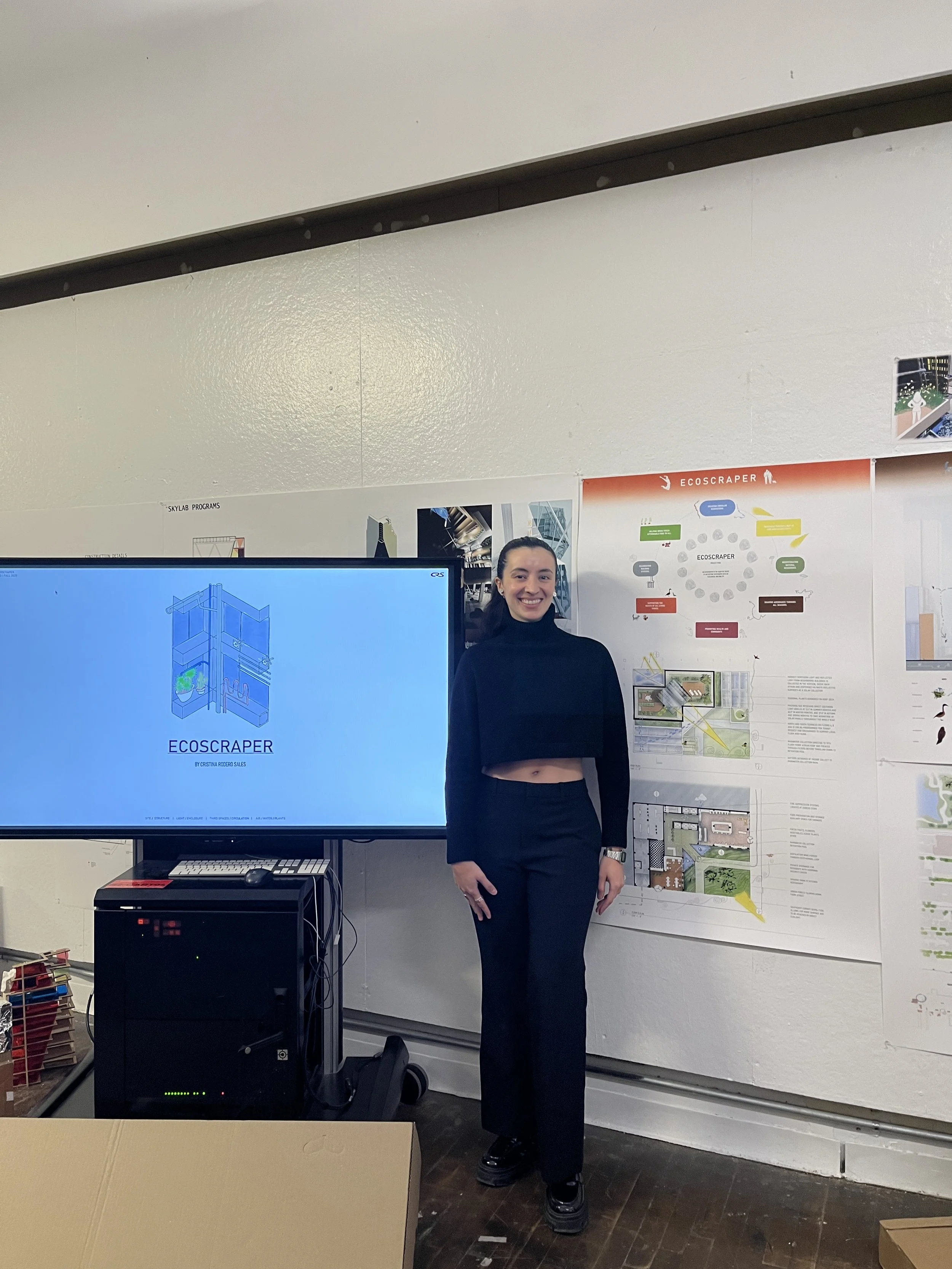
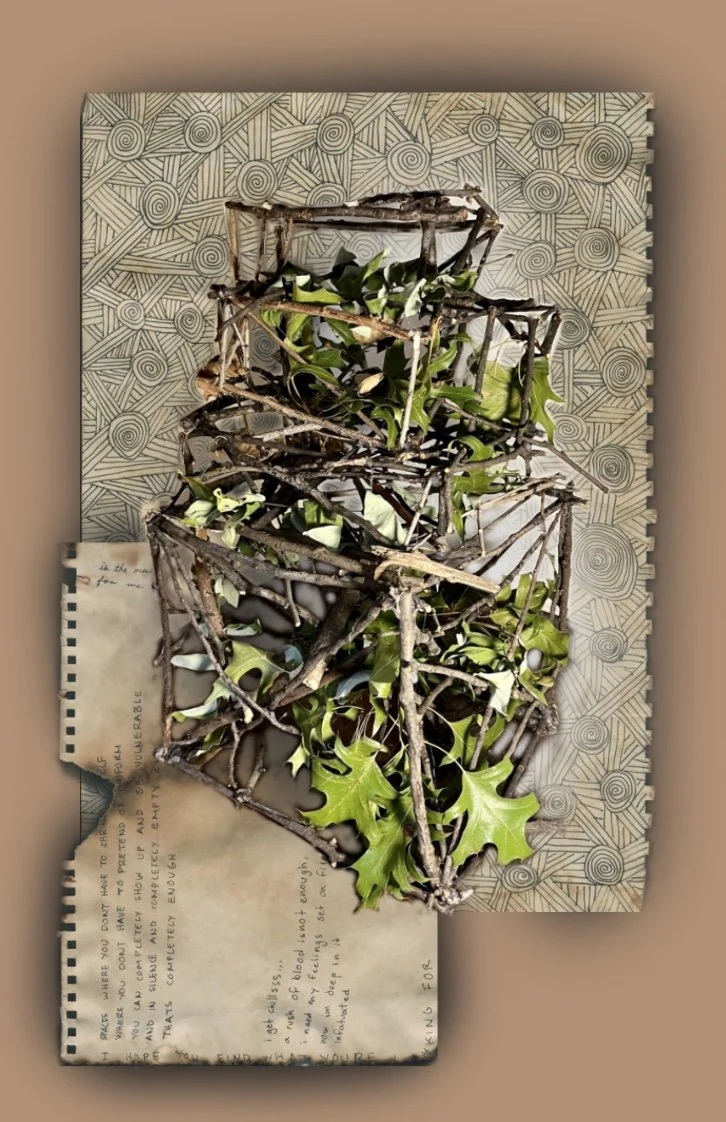
During my first-year Master’s studio, I engaged deeply with the challenge of adaptive reuse through a project focused on the 22-story, mid-century office tower at 460 Park Avenue in Manhattan. Originally designed by Emory Roth and Sons in 1954, this building is a relic of an era defined by prefabricated glass and aluminum facades, now facing a 40% vacancy rate and obsolescence in a rapidly evolving urban context. Inspired by the studio’s guiding philosophy—embracing complexity, contradiction, and layers of meaning—I envisioned an “Ecoscraper” that would transform this aging skyscraper into a vibrant, symbiotic ecosystem where architecture, nature, and community coexist.
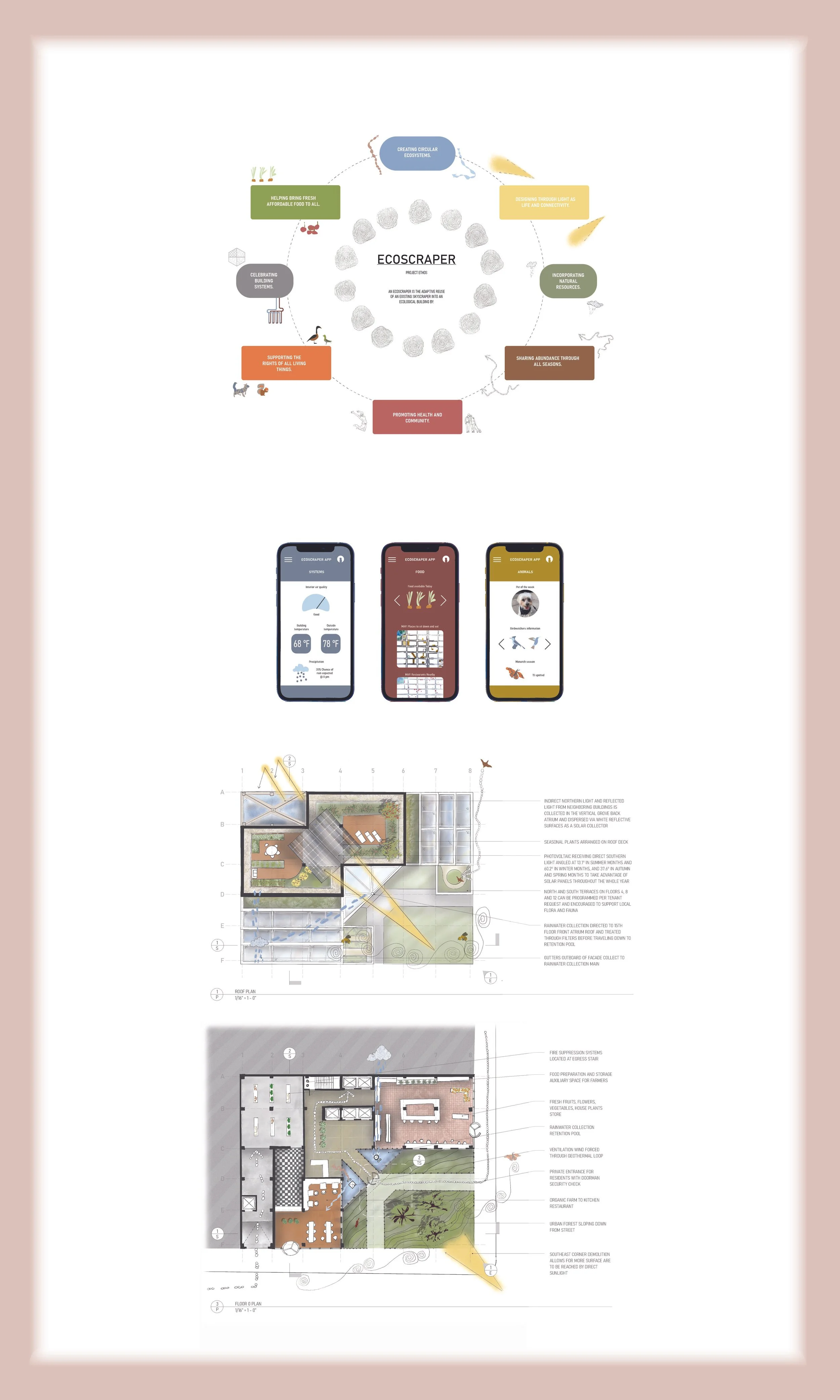
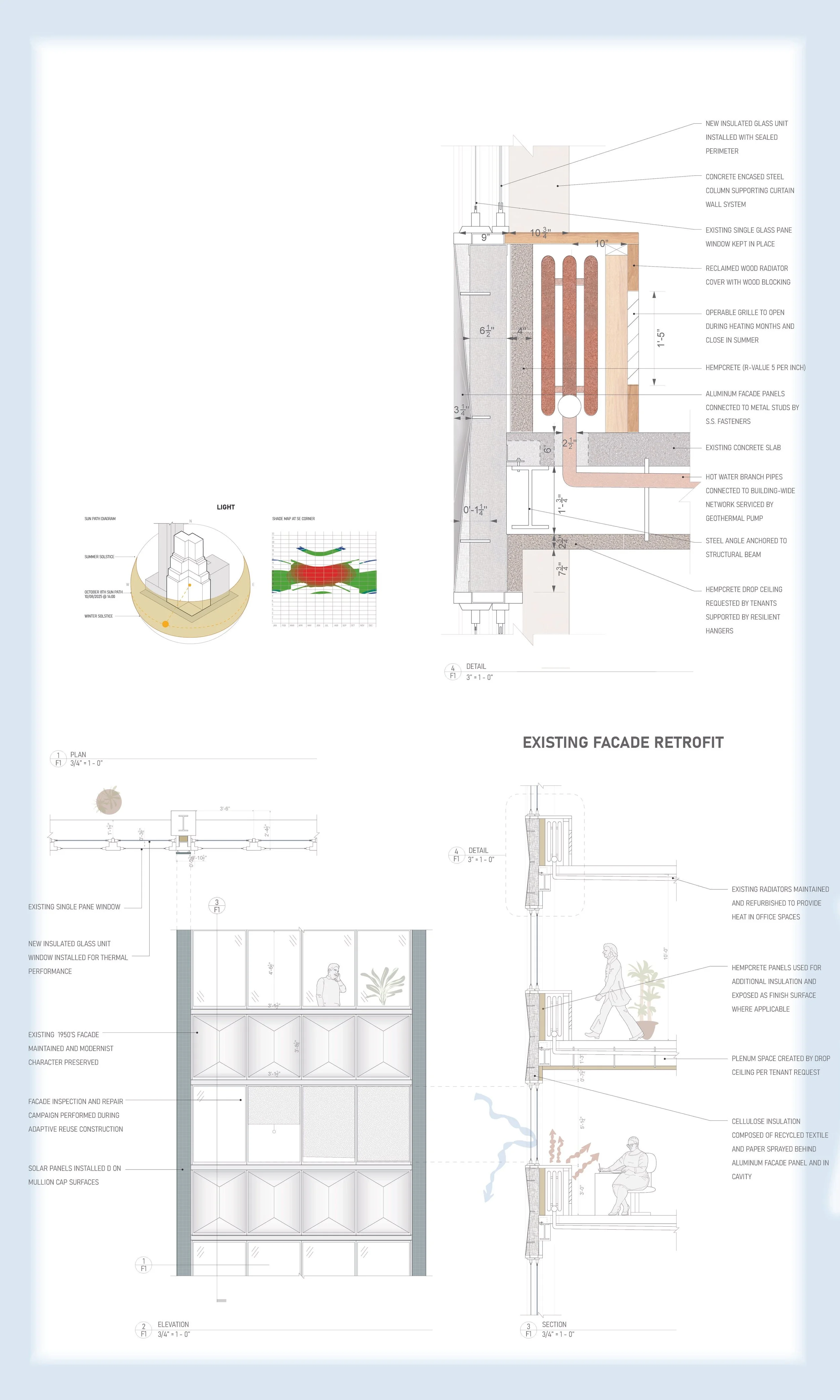
My design centered on the idea of symbiosis between species, integrating natural systems with human habitation to create a building that is both energy-efficient and ecologically regenerative. I prioritized recycling materials from the existing structure wherever possible, reducing waste and honoring the building’s history while pushing it toward a sustainable future. Water and solar energy were harnessed strategically through rainwater collection, daylighting, and solar panels, supporting both the building’s operations and its green spaces. I carefully programmed indoor and outdoor spaces to promote human health and well-being, incorporating atriums, balconies, and greenhouses that foster natural airflow and connection to nature.